
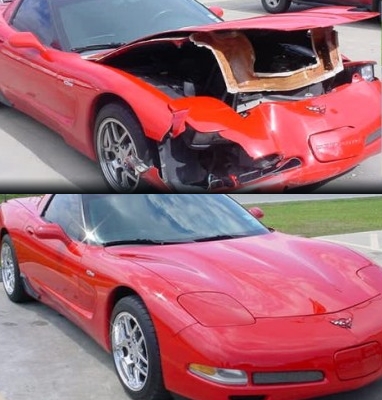
What Is Diminished Value?
Diminished value reflects how the automotive market actually behaves after a vehicle has been involved in an accident. Even when repairs are performed correctly and the vehicle appears fully restored, buyers, dealers, and appraisers continue to treat accident history as a risk factor. This market hesitation translates directly into lower resale and trade-in values.
In today’s data-driven environment, accident records are permanently attached to a vehicle through history reporting services. These reports are routinely checked by dealerships, private buyers, and even online car-buying platforms. Once an accident is recorded, it becomes part of the vehicle’s identity, regardless of how well the repairs were completed. This lasting stigma is the foundation of diminished value.
For New Jersey vehicle owners, this means the financial impact of an accident often extends well beyond the initial repair process. Diminished value represents a real monetary loss that can affect future sale negotiations, trade-in offers, and overall vehicle equity.
Is Diminished Value Recoverable in New Jersey?
New Jersey law not only recognizes the right to claim diminished value, but also allows recovery in third-party claims when another driver is at fault.This right exists because repairs alone do not make a vehicle whole in the eyes of the market. While insurance companies may not proactively explain this, diminished value recovery is recognized in third-party claims.
Despite this recognition, insurers often resist paying diminished value unless the claim is properly presented and supported. Many claims are delayed or denied simply because the insurer assumes the claimant will not challenge the decision. Understanding that diminished value is legally recoverable empowers vehicle owners to push back against incomplete settlements.
It is also important to understand that diminished value claims are separate from repair claims. Accepting payment for repairs does not automatically eliminate your right to pursue diminished value, but failing to address it early can complicate negotiations later.
Types of Diminished Value
There are three commonly recognized forms of diminished value, and understanding the differences is important when evaluating your claim.
- Immediate diminished value occurs the moment an accident happens, reflecting the sudden loss in market perception before any repairs are made. While this type is less commonly pursued, it illustrates how quickly a vehicle’s value can change after a collision.
- Repair-related diminished value arises when repairs do not fully restore the vehicle to pre-accident condition. This can include mismatched paint, improper alignment, or unresolved mechanical issues. While this type of diminished value may be easier to identify, it often overlaps with repair disputes.
- Inherent diminished value is the most common and significant category. It exists even when repairs are flawless because it is driven by buyer behavior, not repair quality. In New Jersey, inherent diminished value is the primary basis for most successful claims because it reflects real-world market outcomes.
In most New Jersey diminished value claims, inherent diminished value is the primary focus, as it reflects real-world market conditions rather than repair quality alone.
Why Accident History Impacts Vehicle Value
Accident history impacts vehicle value because it introduces uncertainty. Buyers may worry about hidden damage, long-term reliability, or future repair costs, even when inspections show no visible issues. This uncertainty leads to lower offers and reduced demand.
Dealers and online vehicle buyers use accident history as a pricing lever. Even a single accident entry can shift a vehicle into a different valuation tier, resulting in thousands of dollars in lost value. These pricing adjustments are not theoretical—they are embedded in appraisal systems used across the automotive industry.
As transparency in vehicle data continues to increase, accident history has become impossible to ignore. This makes diminished value more relevant today than ever before.
Vehicles Most Affected by Diminished Value
While any vehicle can experience diminished value, some are more susceptible than others. Vehicles that commonly experience higher losses include newer models, luxury vehicles, and cars with no prior accident history.
High-end vehicles often suffer greater diminished value because buyers in that market segment have higher expectations. Similarly, low-mileage vehicles tend to lose more value after an accident because the accident represents a larger deviation from expected condition.
How Diminished Value Is Calculated
There is no universal formula for calculating diminished value, which is one reason insurance companies often dispute claims. Some insurers rely on simplified or outdated formulas that do not reflect actual market behavior.
An accurate diminished value assessment considers factors such as vehicle make and model, age, mileage, pre-accident condition, severity of damage, quality of repairs, and current market conditions in New Jersey. Market-based analysis is far more effective than generic calculations when supporting a claim.
Common Insurance Company Tactics
Insurance carriers frequently attempt to minimize or deny diminished value claims. Common tactics include arguing that repairs restored full value, relying on flawed formulas, or asserting that diminished value only applies to newer vehicles.
In many cases, insurers may offer low settlement amounts that do not reflect real market loss. Without proper documentation, vehicle owners may feel pressured to accept these offers even when they undervalue the claim.
Why Documentation Matters
Strong documentation is one of the most important elements of a successful diminished value claim. Without clear and organized records, insurance companies can easily dismiss diminished value as speculative or unsupported. Proper documentation turns a claim from a general complaint into a substantiated financial demand backed by evidence.
Key documentation includes detailed repair invoices, photographs of the vehicle before and after repairs, vehicle history reports, and any correspondence with the insurance company. These materials establish the extent of the damage, confirm that repairs were completed, and demonstrate that the vehicle now carries a permanent accident record. Together, they form the factual foundation of a diminished value claim.
Timing Your Diminished Value Claim
Timing plays a critical role in the success of a diminished value claim. Most claims should be pursued after repairs are fully completed, as the final condition of the vehicle must be evaluated before an accurate assessment can be made. Filing too early may result in incomplete valuation or insurer resistance due to unresolved repair issues.
At the same time, delaying a diminished value claim for too long can weaken your position. Insurance companies operate within specific claim-handling timelines, and unnecessary delays may reduce leverage or complicate negotiations. In some cases, claimants may mistakenly assume diminished value must be addressed immediately or not at all, which is not accurate.
Diminished Value vs. Repair Costs
Repair costs and diminished value address two very different types of loss. Repair costs cover the expense of restoring a vehicle to a safe and operable condition. Diminished value, on the other hand, addresses the financial loss that remains even after those repairs are completed.
Many vehicle owners assume that once repairs are paid for, the claim is fully resolved. In reality, a vehicle can be perfectly repaired and still be worth significantly less due to accident history. This gap between repair completion and market value is the essence of diminished value.
Insurance companies often fail to clearly explain this distinction, which leads many claimants to unknowingly accept incomplete settlements. Understanding the difference allows vehicle owners to pursue full compensation rather than absorbing a loss that is not reflected in repair payments alone.
Selling or Trading a Vehicle After an Accident
The financial impact of diminished value often becomes most apparent when a vehicle owner attempts to sell or trade in a repaired vehicle. Accident history often forces owners to sell the vehicle at less than market value, even when repairs were completed correctly.
Private buyers also tend to negotiate more aggressively when a vehicle has an accident record. Even when inspections confirm that repairs were completed properly, buyer hesitation often results in lower offers or longer selling timelines. This reduction in value reflects real market behavior, not hypothetical loss.
A diminished value claim seeks to compensate vehicle owners for this future loss upfront. By addressing diminished value before selling or trading the vehicle, owners can avoid absorbing the financial impact later, when negotiating power may be limited.
Why Professional Claim Review Is Important
Diminished value claims involve negotiation, valuation, and insurer scrutiny. Working with an NJ diminished value expert helps ensure that your claim is evaluated using real market data rather than insurance company formulas.
This review also identifies weaknesses in insurer arguments and helps ensure that valuation methods align with real-world market behavior rather than internal insurance formulas. If another party caused the accident, you may be entitled to the diminished value of your vehicle in addition to repair costs.
Start Your New Jersey Diminished Value Claim Review Here
New Jersey Diminished Value Claim InfoRMATION
Understanding the specific rules that apply to diminished value claims in New Jersey is essential before moving forward with a claim. State laws, insurance coverage requirements, and recent court decisions all play a role in determining whether compensation is available and how a claim should be handled.
The information below outlines key New Jersey–specific factors that affect diminished value claims, including time limits, uninsured motorist coverage, and important legal rulings that impact third-party claims. Reviewing these details can help vehicle owners better understand their rights and avoid costly misunderstandings during the claims process.
New Jersey Statute Of Limitations: 6 Years
Uninsured Motorist Coverage: YES
Diminished Value For At Fault Party: NO
***BREAKING NEWS! On 2/28/2019 the New Jersey Court of Appeals finds that diminished value claims are payable in addition to the cost of repairs in 3rd party claims. That means that if you were not at fault in the accident, you are entitled to be paid for the loss of value (Diminished Value) of your vehicle after the repairs are completed. You can read the courts decision by Clicking Here.
Final Thoughts on New Jersey Diminished Value Claims
Diminished value is a real and measurable financial loss that many New Jersey drivers face after an accident. While repairs may restore a vehicle’s appearance and drivability, accident history remains and continues to impact resale and trade-in value.
This is where CollisionClaims.com plays an important role. While insurance companies focus primarily on repair costs, Collision Claims helps vehicle owners identify and recover the loss in value that is often overlooked after an accident.
Even after a claim is settled and repairs are completed, many drivers are unaware they may still be entitled to additional compensation. By working with Collision Claims, vehicle owners gain clarity on their diminished value and avoid leaving money on the table.
Understanding your rights and taking action through Collision Claims ensures your claim reflects the true financial impact of the accident. Call 1-866-438-6938 or message us here.